

Disclosure: As an Amazon Associate, Dogly earns from qualifying purchases. If you buy through a link on this page we may receive a small commission at no extra cost to you. This article is general guidance, not veterinary advice — always speak to your vet about the right parasite protection for your dog.

Warm, damp British summers are brilliant for walks and miserable for parasite control. Fleas breed happily indoors all year now that most of us have central heating, and tick numbers climb every spring as the countryside warms up. Lord Bentley picks his way through long grass on every walk, so tick-checking him is just part of the routine here. This guide covers the practical stuff: how to keep both parasites off your dog, what to actually use, and — the bit everyone panics about — how to remove a tick safely, step by step.
Fleas vs ticks: what’s the difference?
They get lumped together because most treatments cover both, but they’re very different problems. Fleas are tiny, fast-moving insects that live in your dog’s coat and, crucially, in your carpets and furniture — for every flea on your dog there are many more eggs and larvae around your home. They cause itching, and in sensitive dogs a single bite can trigger a nasty allergic skin reaction. Ticks are larger, spider-like arachnids that latch on, bury their mouthparts in the skin and feed for days. They don’t infest your home, but they matter more per-bite because they can transmit disease, including Lyme disease.
How to check your dog for ticks
Get into the habit of a quick check after any walk through long grass, woodland, moorland or anywhere with deer or livestock — these are prime tick spots. Run your hands slowly over your dog like you’re giving them a fuss, feeling for small bumps. Pay special attention to the warm, sheltered areas ticks prefer: around the head and ears, under the collar, the armpits, the groin, and between the toes. A tick can feel like a small skin lump or wart — look closely for legs to tell the difference. The sooner you find and remove a tick, the lower the disease risk, so daily checks in tick season (roughly March to October in the UK) are worth the two minutes. In hot spells it is all part of the same summer routine as the gear in our heatwave cooling guide.
How to remove a tick from a dog
This is the part people get wrong, and getting it wrong can make things worse. The golden rule from UK vet charities (PDSA, Blue Cross, Dogs Trust and the RSPCA all agree) is: never squeeze, crush, burn or smother the tick. Squeezing the body can push the tick’s stomach contents — and any disease it carries — back into your dog, which is exactly what you’re trying to avoid. Old wisdom about burning ticks off with a match or coating them in Vaseline is not just useless, it’s actively risky. Do it properly instead:
Step by step
- Get your kit ready. The best tool is a purpose-made tick-twister (they usually come in packs of two or three sizes). Fine-tipped tweezers will do in a pinch. Wash your hands, and wear gloves if you have them.
- Keep your dog calm and still. A wriggling dog mid-removal is how mouthparts get left behind. It helps to have someone gently hold and reassure them, especially if the tick is near the eyes, ears or mouth.
- Part the fur and position the tool. Slide the tick-twister under the tick, as close to your dog’s skin as possible, so you’re gripping the tick’s head — not its swollen body. If the tool doesn’t sit neatly around it, switch to a different size.
- Twist, don’t pull. This is the key difference from a tweezer-yank. Without pulling upwards, twist the tool steadily in one direction. After a few turns the tick releases its grip and comes away cleanly. (With plain tweezers you can’t twist as neatly — grip as close to the skin as possible and pull straight out with slow, steady pressure, no jerking.)
- Check the site. Make sure the whole tick has come away and nothing’s left behind. A small black dot in the skin can mean mouthparts remain — see the note below.
- Dispose of the tick and clean up. Pop it in a tissue and flush it, or drop it in a little rubbing alcohol. Don’t crush it with your fingers — ticks carry diseases that affect people too. Wash your hands and give the bite area a wipe.
What if the head breaks off?
If a small part is left in the skin, don’t dig at it. Often the body works it out on its own like a splinter. Keep the area clean and watch it — if it becomes red, hot, swollen or starts to ooze, or you’re unsure, speak to your vet. Don’t be tempted to gouge it out, which usually causes more irritation than the leftover mouthpart itself.
When to call the vet
Contact your vet if you can’t remove the tick, if the bite site looks infected, or — importantly — if your dog shows any signs of tick-borne illness in the days or weeks afterwards: lethargy, fever, loss of appetite, a shifting lameness, or swollen lymph nodes. Lyme disease and babesiosis both come from ticks; caught early, Lyme disease is treatable with antibiotics. If you’re ever unsure about removing a tick yourself, your vet or groomer will happily do it.
Preventing ticks and fleas in the first place
Prevention beats treatment every time — it spares your dog the bites and removes the disease risk entirely. The most effective parasite protection is prescription-strength, and this is where your vet earns their keep. The gold-standard options are:
- Spot-on treatments — liquid applied to the back of the neck monthly. Products containing fipronil (such as Frontline) are widely used for fleas and ticks.
- Chewable tablets — palatable chews given monthly or every three months, often the most reliable option because there’s nothing to wash off or rub away.
- Tick collars — collars releasing repellent over several months (such as those containing flumethrin) suit dogs who spend a lot of time in high-risk areas.
The genuinely effective tick and flea preventives are prescription-only (POM-V) or pharmacy medicines, so your vet is the right first stop — they’ll match the product to your dog’s weight, lifestyle and risk level, and many practices bundle it into a monthly health plan that works out cheaper than buying ad hoc. Over-the-counter options you’ll find online tend to be weaker, and some contain permethrin, which is highly toxic to cats — so if you have cats in the house, never use a dog product on them and take advice before buying.
Useful kit to keep at home
Whatever preventive your vet recommends, a couple of low-cost bits are worth keeping in the drawer so you’re ready when you find a tick mid-walk-season:
O’Tom Tick Twister (3-pack of sizes) — the essential tool

This is the single most useful thing to own for tick season — and it happens to be the exact style of tool the UK vet charities recommend. The twisting action removes the whole tick cleanly without squeezing it, the three sizes cover everything from tiny nymphs to fully-fed adults, and it’s reusable for years. At a few pounds it’s a no-brainer to keep one in the car and one in the walking bag.
Flea comb (2-pack) — for spotting fleas early

A fine-toothed metal comb drags fleas and flea dirt out of the coat, so it’s the quickest way to check whether that scratching is actually fleas before you commit to a treatment. Comb over a sheet of damp white kitchen roll — if the specks you catch smear red-brown, that’s digested blood, and you’ve got fleas.
Virbac Indorex Defence household flea spray — treat the home
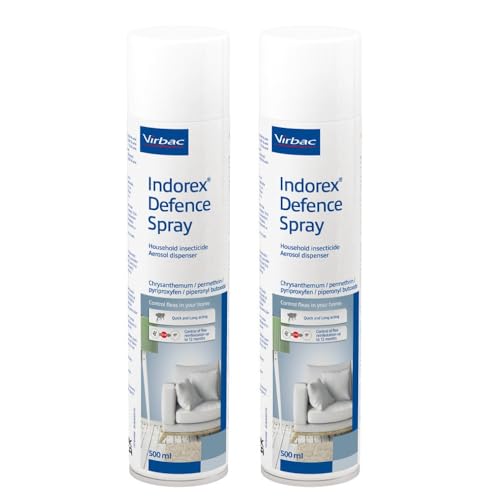
Because most of a flea problem lives in your carpets and soft furnishings — not on your dog — treating the home is what actually breaks the cycle. Indorex is a long-standing favourite that kills adult fleas and stops eggs and larvae developing for up to a year. One tin covers a good-sized home; keep pets and people out of the room until it’s dry.
These help you manage and monitor, but they don’t replace a proper vet-prescribed preventive — think of them as the belt-and-braces alongside it.
Browse all our flea & tick essentials in the shop →
Fleas: treating an infestation
If your dog’s already scratching and you’ve spotted fleas or flea dirt (little black specks that turn red-brown on a damp tissue), remember the golden rule: treat the dog and the home together. Around 95% of a flea population — eggs, larvae, pupae — is in your carpets, bedding and furniture, not on the dog. Treat the dog with a vet-recommended product, wash all bedding on a hot wash, vacuum thoroughly (including under furniture, then bin the bag), and use a household flea spray on carpets and soft furnishings. Miss the home and you’ll be back to scratching within days as the next generation hatches.
FAQs
How do I remove a tick from my dog without a tool?
It’s best to use a tick-twister, but if you don’t have one, fine-tipped tweezers work: grip the tick as close to the skin as possible, right at the head, and pull straight out with slow, steady pressure — no twisting or jerking, and never squeeze the body. If you have nothing at all and the tick needs to come off, your vet or groomer can remove it.
Should I use Vaseline or burn a tick off?
No. Smothering a tick in Vaseline, or trying to burn it off, doesn’t work and increases the risk of it regurgitating disease into your dog. Always remove ticks physically with a twister or tweezers.
How long does a tick need to be attached to transmit disease?
The risk rises the longer a tick feeds, which is why prompt removal matters — a tick can begin transmitting infection within hours. Daily checks in tick season and quick, correct removal are your best defence.
Do I need flea and tick treatment in winter?
Usually yes for fleas — centrally heated homes let fleas breed year-round, so most vets recommend continuing treatment through winter. Tick activity is lower in cold months but not zero. Your vet will advise the right year-round routine for your dog.
Can I use the same product on my cat?
Never assume so. Some dog flea and tick products contain permethrin, which is highly toxic — potentially fatal — to cats. Always use species-specific products and check with your vet, especially in a multi-pet household.
My dog has a lump where the tick was — is that normal?
A small bump or a bit of redness at the bite site is common for a few days after removal. If it grows, becomes hot, swollen or oozes, or your dog seems unwell, contact your vet as it may be infected or a sign of leftover mouthparts.